Hip Replacement Physio at Home: A Simple Guide to Recovering After Surgery
Nov 24, 2026 · By Jagdish Kaswala · 16 min read
Having a hip replacement is a big step towards reducing pain and making everyday activities easier. Once your operation is over, you will usually receive some exercises, advice from the hospital team and a date for your follow-up appointment.
But what happens when you get home?
You may be wondering how much walking you should do, which exercises are safe, when you can manage the stairs or how long it will take before you feel normal again.
These are common questions, and it is completely understandable to feel unsure during the first few weeks.
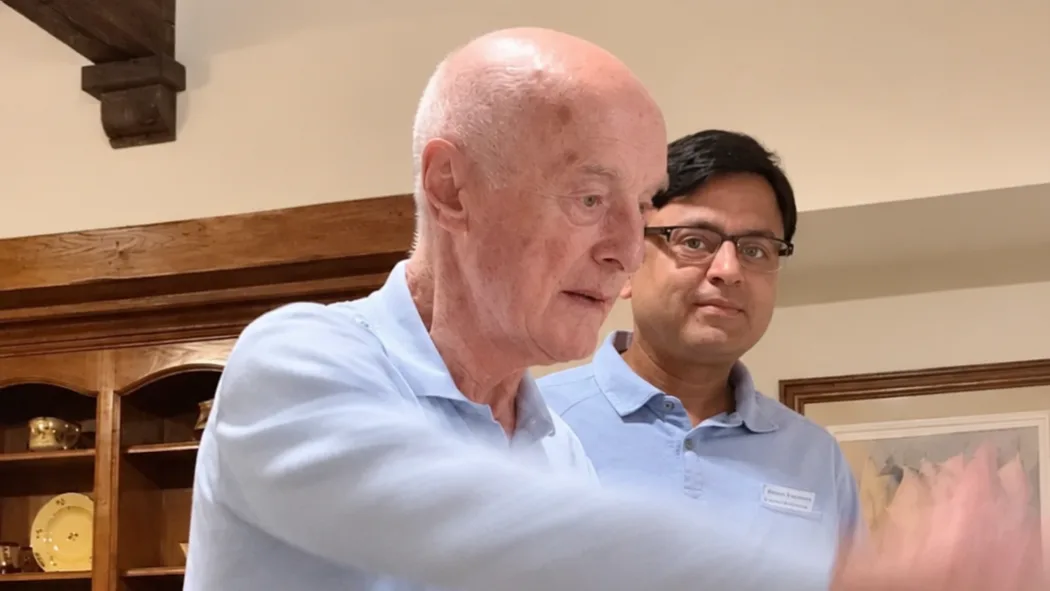
At Speedwell Physio, we understand that recovering at home can be challenging. Our physiotherapists regularly visit people after surgery and help them get back to their usual activities safely.
In this guide, we explain what to expect after a hip replacement, which exercises may help, how to make your home safer and when home physiotherapy could be useful.
What is hip replacement physiotherapy at home?
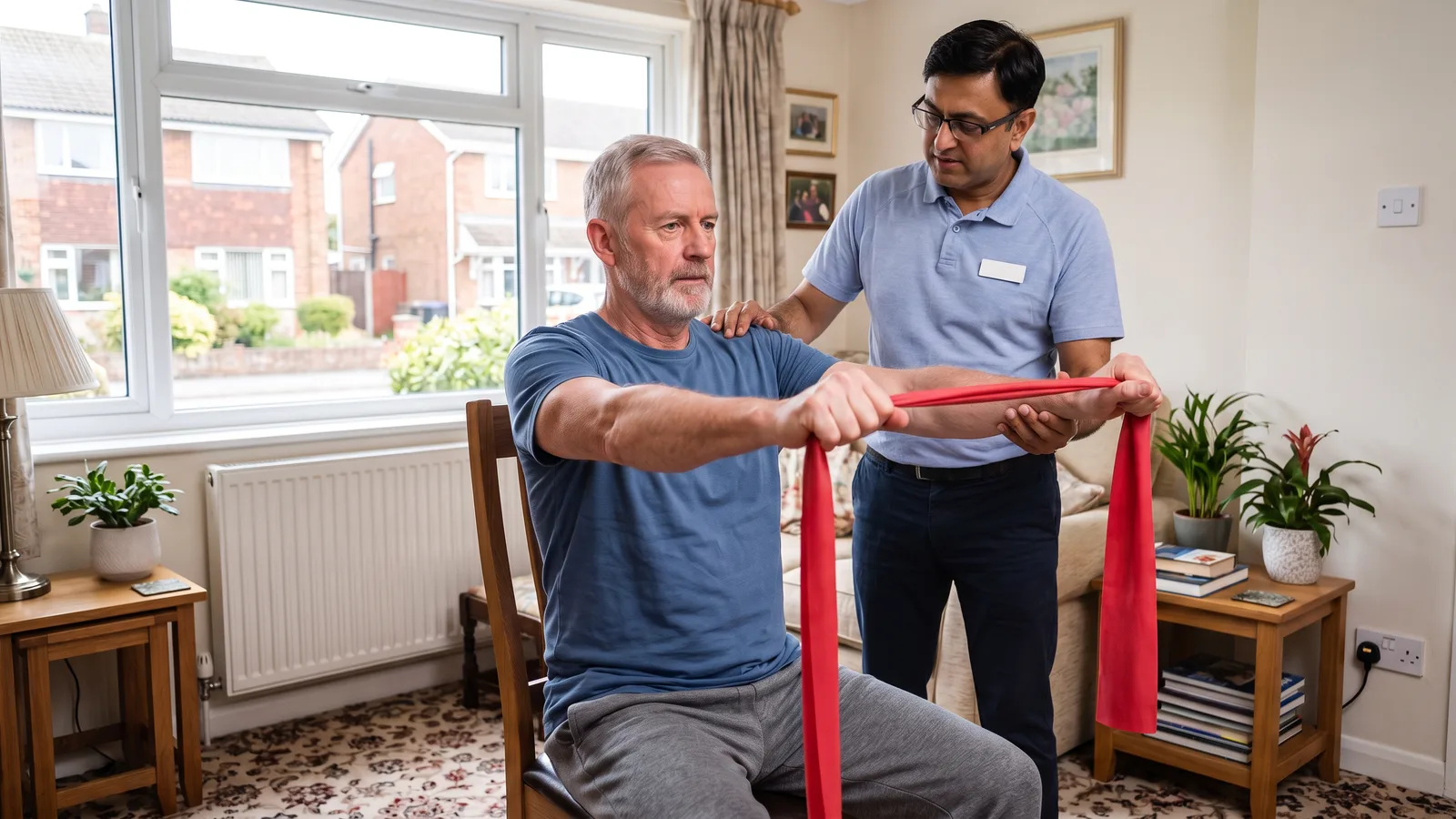
It involves a physiotherapist visiting you at home after your operation. They help you with exercises, walking, improving your strength and getting back to everyday activities.
The aim is to help you recover safely and become more confident with your movements. The length of treatment depends on your progress and individual needs.
Why Is Physiotherapy Important After Hip Replacement Surgery?
Your recovery starts soon after your operation. In fact, physiotherapy usually begins in hospital, often on the day of surgery or within 24 hours, depending on your condition.
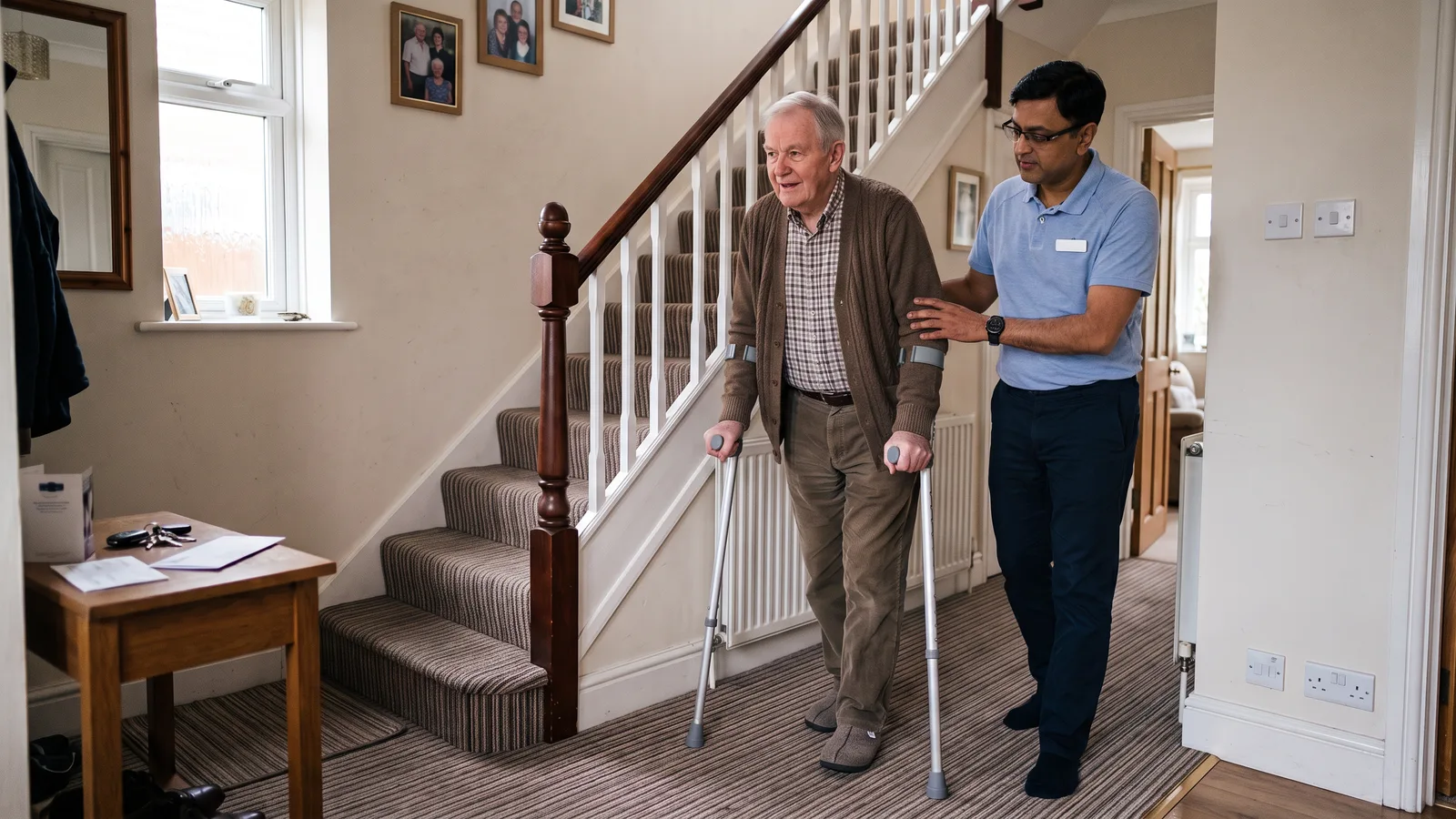
Your hospital physiotherapist may help you take your first steps using a walking frame or crutches. You may also be shown some simple exercises to do while sitting or lying in bed.
These early movements are important because they help you start using your new hip safely.
Many people only stay in hospital for a short time before returning home. Although you will receive instructions about what to do, you may still need extra help once you are back in your own surroundings.
This is where a home physiotherapist can make a difference.
Physiotherapy after hip replacement can help you:
- Reduce stiffness and manage swelling.
- Strengthen the muscles around your hip and legs.
- Improve your walking and balance.
- Learn how to use your walking frame, crutches or walking stick correctly.
- Practise getting in and out of bed and chairs.
- Become more confident when using stairs.
- Return to everyday activities gradually.
The aim is not just to help your hip heal. It is also to help you become independent again.
What to Expect During the First 12 Weeks After Hip Replacement
Everyone recovers differently. Your age, general health, fitness and the type of operation you have had can all affect how quickly you improve.
Your surgeon's instructions should always come first.
The following stages give you a general idea of how recovery may progress.
Days 1–14: Getting Used to Moving Again
The first two weeks are mainly about getting comfortable and learning how to move safely.
You will usually be doing simple exercises, taking short walks around your home and resting regularly.
Some swelling, bruising and discomfort are normal during this period.
You may need a walking frame at first before moving on to crutches, depending on your progress and your hospital team's advice.
Your first goals might include:
- Getting in and out of bed safely.
- Walking between rooms.
- Using the toilet independently, if possible.
- Getting comfortable sitting in a suitable chair.
- Managing your exercises.
Don't worry if you need help with some activities. Small improvements are important.
Weeks 2–6: Improving Strength and Walking
As your recovery continues, you will usually start to increase your activity.
Your physiotherapist may introduce more exercises to strengthen your legs and the muscles around your hip.
You may also practise:
- Walking for slightly longer periods.
- Going up and down stairs safely.
- Getting in and out of a car.
- Standing up from different chairs.
- Improving your balance.
You may gradually move from a walking frame to crutches or a stick if your physiotherapist or surgical team feels you are ready.
Avoid doing too much just because you are beginning to feel better. Your body still needs time to recover.
Weeks 6–12: Building Confidence and Independence
By this stage, many people notice improvements in their walking and everyday movements.
You may be able to walk further, manage more household activities and spend less time resting.
Your physiotherapist may introduce exercises that focus on:
- Improving hip and leg strength.
- Walking with better control.
- Improving balance.
- Standing for longer.
- Returning to light daily activities.
Some people may start using an exercise bike or increase their walking, if their surgeon or physiotherapist agrees.
You should not feel pressured to stop using your walking aid too soon. It is important to walk safely rather than rush your recovery.
Three to Six Months and Beyond: Returning to Normal Activities
Recovery continues beyond the first three months.
You may find that everyday activities become easier and that you are gradually able to return to hobbies, gardening and other things you enjoy.
Your physiotherapist can help you develop a longer-term exercise routine to maintain your strength and mobility.
Activities such as running, jumping and other high-impact sports may not be suitable straight away. Ask your surgeon when it is safe to return to these activities.
Remember that recovery is different for everyone. There is no need to compare your progress with someone else's.
Five Simple Exercises After Hip Replacement Surgery
Exercise is an important part of recovery following a hip replacement. The right movements can help improve muscle strength, circulation and mobility.
However, not every exercise is suitable for everyone.
Only do exercises that have been approved by your surgeon or physiotherapist. Your exercise programme will depend on the type of surgery you have had and any movement restrictions you have been given.
Here are five exercises that are commonly included in early rehabilitation.
1. Ankle Movements
Help improve circulation in your legs.
This is a simple exercise that can usually be done while lying in bed or sitting in a chair.
How to do it:
- Keep your legs relaxed.
- Point your toes gently away from you.
- Bring your toes back towards your body.
- Repeat slowly.
These movements help keep your ankles moving and encourage blood circulation.
2. Buttock Squeezes
Help activate the muscles around your hips.
How to do it:
- Lie on your back or sit comfortably.
- Gently tighten your buttock muscles.
- Hold for a few seconds.
- Relax and repeat.
Keep breathing normally while doing this exercise.
3. Thigh Tightening
Help strengthen the muscles at the front of your thigh.
How to do it:
- Lie on your back with your operated leg straight, if permitted.
- Gently tighten the muscles at the front of your thigh.
- Press the back of your knee towards the bed.
- Hold briefly and relax.
Your physiotherapist can show you the correct way to do this.
4. Supported Marching
Help improve leg strength and walking movements.
How to do it:
- Stand beside a secure kitchen worktop.
- Hold the surface for support.
- Slowly lift one knee a small distance.
- Lower your foot carefully.
- Repeat with the other leg.
Only try this exercise when your physiotherapist has confirmed that it is suitable for you.
5. Short Walks
Help you gradually return to everyday movement.
Walking is an important part of hip replacement recovery.
Start with short walks around your home using the walking aid recommended by your healthcare team.
As you become stronger, you may be able to increase the distance.
It is better to take several short walks throughout the day than to attempt one long walk that leaves you exhausted or increases your pain.
How many times should you do these exercises?
Your physiotherapist will advise you on the number of repetitions and how often to exercise.
Do not try to complete more exercises than recommended. If you experience sharp pain or unusual symptoms, stop and seek advice.
How to Make Your Home Safer After Hip Replacement Surgery
When you return home, even simple activities can feel difficult at first.
Your bedroom, bathroom, stairs and living room may all present different challenges.
Before returning home, it is worth checking whether your surroundings are suitable for your recovery.
Here are eight things to consider.
1. Check Your Stairs
If your home has stairs, make sure there is a secure handrail.
Keep the staircase clear and make sure the lighting is good.
You should have been shown how to use stairs safely before leaving hospital. Follow the technique taught by your physiotherapist.
2. Make Sure Your Bed Is Suitable
Getting in and out of bed may be difficult during the early stages.
Your bed should be at a comfortable height so that you can sit down and stand up safely.
If you have an adjustable bed, your physiotherapist can advise whether the settings are suitable.
3. Choose the Right Chair
Very low or soft sofas can make standing up difficult.
A firm chair with armrests is often more suitable because you can use your arms to help you stand.
Your physiotherapist can help you decide whether your usual chair is suitable.
4. Make Bathroom Activities Easier
The bathroom can be difficult to manage after hip surgery.
Depending on your needs, you may benefit from:
- A raised toilet seat.
- Grab rails.
- A shower seat.
- A non-slip mat.
An occupational therapist or physiotherapist can advise which equipment may be useful.
5. Remove Things That Could Cause You to Trip
Move loose rugs, electrical cables and other objects away from your walking routes.
Keep the floors clear so that you have enough room to use your walking frame or crutches.
6. Keep Important Items Nearby
You may not want to walk around the house every time you need something.
Keep your phone, medication, glasses, water and other everyday items somewhere easy to reach.
Avoid bending down or stretching to reach things.
7. Be Careful Around Pets
Pets can sometimes get under your feet, particularly when you are using a walking frame or crutches.
Ask someone to help manage your dog or cat during the early stages of recovery.
8. Make Sure You Have Good Lighting
Good lighting is especially important when getting up during the night.
Consider using a night light between your bedroom and bathroom.
Make sure light switches are easy to reach.
A home physiotherapy visit can help identify problems that you may not have noticed yourself.
What Movements Should You Avoid After Hip Replacement?
You may have been given a list of movements to avoid after your operation. These are sometimes called hip precautions.
They are intended to reduce the risk of problems while your new hip is healing.
The precautions you need to follow depend on the type of hip replacement you have had and your surgeon's instructions.
You may be advised to avoid certain movements, such as:
- Bending your hip too far.
- Crossing your legs.
- Twisting your operated leg in certain positions.
- Sitting in very low chairs.
Not everyone needs the same restrictions, and the advice can vary between patients.
Always follow the instructions given by your surgeon and hospital physiotherapist.
If you have forgotten which movements you should avoid, contact your hospital team and ask them to explain the precautions again.
Do not rely on general advice from the internet instead of your own surgical instructions.
Seven Common Mistakes That Can Slow Down Your Recovery
It is natural to want to get back to normal as quickly as possible after surgery.
However, trying to do too much or not following your exercise programme can make recovery more difficult.
Here are seven things to watch out for.
1. Doing Too Much Too Soon
You may have a good day and feel ready to do more walking or household jobs.
But your body is still healing.
Increase your activity slowly and give yourself enough time to rest.
2. Missing Your Exercises
It can be tempting to stop exercising when your pain starts to improve.
However, your muscles still need strengthening after surgery.
Follow the exercise programme given to you by your physiotherapist.
3. Stopping Your Walking Aid Too Early
You may feel that you no longer need your walking frame or crutches.
However, if you are still limping or struggling with your balance, stopping too early may increase your risk of falling.
Ask your physiotherapist before changing your walking aid.
4. Using Your Walking Aid for Longer Than Necessary
The opposite can also happen.
Some people continue using their walking frame or crutches because they are worried about walking without them.
Your physiotherapist can assess your walking and help you decide when it is safe to move on to less support.
5. Ignoring Swelling
Some swelling is common after hip replacement surgery.
Resting, following your exercise advice and keeping your leg comfortably supported may help.
However, sudden or increasing swelling, particularly when accompanied by calf pain or warmth, needs medical attention.
6. Sitting for Too Long
Spending long periods in the same position can make your joints feel stiff.
Try to change position and move regularly, following the advice given by your healthcare team.
7. Not Talking About Your Concerns
You may be worried about pain, walking, sleeping or using the stairs.
Do not keep these concerns to yourself.
Your physiotherapist can explain what is normal, answer your questions and help you feel more confident.
When Is Home Physiotherapy Particularly Helpful?
Many people recover well by following the advice they receive in hospital.
However, some people need extra support once they return home.
Home physiotherapy may be particularly useful if you:
- Live on your own.
- Have stairs that you need to use regularly.
- Are older or have existing balance problems.
- Have experienced falls before your operation.
- Have other health conditions that affect your movement.
- Find it difficult to walk or complete everyday tasks.
- Feel worried about exercising without someone checking your movements.
One of the main benefits of a home visit is that your physiotherapist can see exactly where you are having difficulties.
They can check how you manage your own stairs, get in and out of your bed and move around your bathroom.
At Speedwell Physio, we provide home visits to help patients recover after surgery.
You can find out more about our post-operative rehabilitation service.
If you are also worried about your balance, our falls prevention and balance training may be helpful.
We also provide physiotherapy for older adults at home.
You do not need a GP referral to arrange private physiotherapy with us.
Warning Signs to Look Out for After Hip Replacement Surgery
Most people recover without serious problems, but it is important to know when something may not be right.
Contact your healthcare team if you notice any unusual symptoms.
Seek emergency medical help by calling 999 if you experience:
- Sudden chest pain.
- Sudden difficulty breathing.
- A serious injury following a fall.
- Severe pain or an inability to put weight on your leg following a fall.
Contact your surgical team, GP or NHS 111 urgently if you notice:
- Pain, redness, warmth or swelling in your calf.
- Increasing redness or warmth around your wound.
- Fluid or pus coming from the wound.
- A wound that appears to be opening.
- A high temperature or feeling generally unwell.
If your operated leg suddenly looks shorter or turns outwards, seek urgent medical advice, as this could indicate a problem with the new hip.
If you have a fall, contact your healthcare team even if you do not appear to have injured yourself.
It is always better to get advice rather than ignore something that does not feel right.
Frequently Asked Questions About Hip Replacement Physiotherapy
When should I start physiotherapy after a hip replacement?
Physiotherapy usually begins in hospital on the day of surgery or within 24 hours, depending on your medical condition.
After returning home, you can continue your exercises and arrange further physiotherapy if you need additional support.
How long will I need a walking stick after hip replacement?
This is different for everyone.
Some people move from a walking frame to crutches and then a stick over several weeks. Others need walking support for longer.
Your physiotherapist will check your strength, balance and walking before advising you to stop using an aid.
Can I have hip replacement physiotherapy at home?
Yes. A private physiotherapist can visit you at home and help you with your recovery.
This can be particularly helpful during the early weeks when travelling to a clinic may be uncomfortable or difficult.
Your physiotherapist can also check your home environment and help you practise everyday activities safely.
Do I need a GP referral for private hip replacement physiotherapy?
No. You can contact Speedwell Physio directly to arrange a home appointment.
It is important to share your hospital discharge instructions and any advice from your surgeon so that your physiotherapist can plan your treatment safely.
When can I start using the stairs after hip replacement?
Many patients practise using stairs with a physiotherapist before leaving hospital.
You should follow the method taught by your hospital team and use your handrail.
If you are worried about managing the stairs at home, a physiotherapist can help you practise safely.
How long does it take to recover fully from a hip replacement?
Recovery takes time and varies from person to person.
Many people notice improvements during the first six to twelve weeks, but strength, comfort and confidence can continue to improve for several months.
Following your exercise programme and gradually increasing your activity can help you make progress.
Need Help Recovering at Home After Hip Replacement Surgery?
Having a hip replacement can improve your quality of life, but getting back to your usual activities takes time.
You may need help with walking, exercises, stairs or simply feeling confident enough to move around your home again.
You do not have to manage everything on your own.
At Speedwell Physio, we provide home physiotherapy to help people recover after hip replacement surgery and other operations.
We bring over 20 years of UK physiotherapy experience directly to your home. Our physiotherapists are registered with the Health and Care Professions Council (HCPC) and the Chartered Society of Physiotherapy (CSP). We are also fully insured and DBS checked.
We visit patients in Aylesbury, Hemel Hempstead and nearby areas of Buckinghamshire and Hertfordshire.
You can check our areas covered page to see whether we visit your location.
If you or a family member needs support after hip replacement surgery, get in touch with us.
Call Speedwell Physio on 07901 082225.
We are available Monday to Saturday, 9am to 7pm.
Alternatively, visit our contact page to arrange a home appointment.
We will be happy to discuss your recovery, answer your questions and help you decide what support you need.
Important: This article provides general information and is not a replacement for advice from your surgeon, GP or physiotherapist. Your recovery programme must be based on your individual condition and the instructions given by your surgical team. Always check before starting new exercises or changing your activity levels.